Tuesday, February 23, 2016

Tren Urbano

                      
J’aime prendre le train à l’université. Des personnes m’ont dit qu’ils n’en trouvent pas rien d’amusant quand on le prend quotidiennement pour quatre ans pour aller à l’université, mais même a ma 5e année de baccalauréat, je le prends avec la même illusion de la première fois. Je le vois avec des yeux d’artiste et de réalisatrice. J’aime l’atmosphère urbaine qu’il transmet. Je trouve fascinant ses mécanismes et son mouvement. J’aime le jeu d’illusion quand on observe le passage rapide du train de l’autre rail à la fois que le train où on se trouve marche ; quand on arrive à une station à la fois que l’autre train sortit ; ou quand on observe dès la fenêtre les personnes qui restent dans la station pendant que le train la quitte. Puis, le trajet lui-même est un peu comme un tour de montagnes russes. J’aime quand on entre le tunnel, et les fenêtres deviennent obscures. J’aime comment, dès l’intérieur, on peut s’imaginer que les portes peuvent être des portales magiques vers différents destins, donc la voiture ne marche pas ; ce qui marche est l’extérieur. Ce que j’aime le plus sont les vues dès la fenêtre. Une opportunité de voir où se déroule ma vie dès haut. Tous les toits des maisons, des urbanisations, les postes d’électricité, les roues, les bâtiments, l’embouteillage a l’autoroute. Voir comme chaque arrête est diffèrent. Le train offre tous sortes des jeux pour l’imagination, et je les prends avec le soin de ne pas manquer un seul, de les apprécier bien. Pour quoi ? Pour deux raisons principales. La première, parce qu’ils font la vie un peu plus interessante, si on le permet. La deuxième, parce qu'ils servent de source d’inspiration pour l’art, pour l’écriture ; il faut les explorer pour voir tout ce qu’ils peuvent offrir pour une bonne création. Je pense que c’est important aussi de capturer ces choses pour faire les personnes conscientes d’eux. Enfin, je veux partager avec les autres comment le train peut être une thérapie pour l’âme, pour réfléchir sur la vie et savourer sa beauté.


Wednesday, February 17, 2016

VILLAINS

When it comes to creating villains, I’m out of my comfort zone. It’s probably because of my extra positive personality. It’s not my thing to deal with negative stuff. I don’t like hard feelings, I don’t like bad, mean people, don’t know too much about them, either; I don’t get their psychology so much. It’s like, it’s hard for me to understand why people can be that way. Well, I actually do understand overall, life is not beautiful for everyone, depending on their circumstances. The problem is that getting in their shoes, empathizing with them, going into a deeper level—THAT is harder for me. That’s why, if I create a villain, it would feel forced. They tend to stress me out, in general, when I’m watching or reading them, especially when it comes to super hero villains. I find tiresome how writers have to be always coming up with how their villain will outwit the hero, and how the hero will overcome him anyways, but keeping it believable at the same time. I also find annoying and pretty childish how these super villains tend to have a motif which influences how they do their bad stuff.
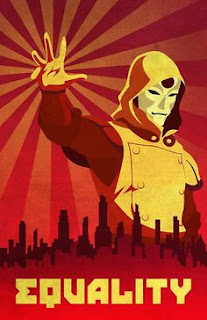
However, there are villains who, even though they might stress me because of their evil, I respect and sometimes even enjoy. For example, Amon from The Legend of Korra. He really did spark fear in me, but I liked how he also inspired awe, there was some majesty to him. Even though he did not—apparently—have the power of bending (the power to control the elements, really useful in battle), he had remarkable skill in the martial arts that matched any bender, PLUS he had the power to actually remove that power. This made him feel truly unstoppable, and even more of a threat as a leader of an equality campaign against benders. The creators did a really good job with this villain, not to mention that his character design was really cool.


Now, there is one type of villain that I like best and with which I’m more comfortable as a writer, and it’s the kind that has a hard past, the kind that used to be good but changed due to a tragic or hard event. These tend to be more real, more believable, and more interesting as it’s more psychological. It’s the idea of a villain who’s got some good mixed within him. There are very popular examples, one being Snape from Harry Potter. The main reason why I like them is their passion and drama, which make them more romantic and thus entertaining. However, I don’t think that a villain should be given much merit because of how entertaining their story is. I think that the complexity of their psychology gives more weight, because that way it is more realistic, more solid, as human beings ourselves are very complex. Recently, I read about a villain who shares both of those qualities: it’s Shadar, from the video game Ni No Kuni. This character was once a wizard who served a powerful kingdom. One day, he was ordered to destroy an entire village, but he decided to rescue a child as he was horrified by the act. As a punishment for disobeying orders, his home village was burned in turn, not sparing anyone. This led Shadar to believe there was no good in the world, and thus become eee-vulll. HOWEVER, one interesting fact is that the purpose behind all of his dark acts afterwards was to end war—a noble goal, but through bad deeds. He became a fanatic. I was impressed by the powerful emotions and drama of this backstory as well as the complexity of the motivation behind this character.


Finally, there’s one other kind of villain which I find interesting, and it’s when you can’t tell on which side he’s on, or when he’s actually on no one’s side, OR when he switches from one side to another. I’m guessing that most people reading this would think of Deadpool as he’s extremely popular right now, but I’m not familiar enough with his character to talk about him. The only villain so far who—at the beginning—has left me very puzzled, was Axel from the video game series Kingdom Hearts. The main antagonists of the series is a group of entities, called Organization XIII. In one part of the story, Sora, the protagonist, has to go through a small group of members of this organization, Axel being one of them. However, he helps Sora eliminate them, but you learn later that they were actually a group of traitors who wanted to take control of their organization, and that Axel sought to eliminate them on the orders of the organization’s boss. So in the end of that chapter, Axel was really helpful, but was still on working on the bad guys’ side…or was he? Even though he gradually fell onto the good guys’ side, his actions and motivations weren’t very predictable, and I enjoyed the confusion he caused as an interesting hook onto the story.

Sunday, October 25, 2015

Groovy

I belong to the seventies.

It's my kind of vintage. There are two things that I like most about it: music and fashion. I love the style of all of the music genres of that decade. There's something about the characteristic flourish of violins in the background of disco songs that always electrifies me; I think it must be the drama. And the congos going mad, giving good flavor. This brings to mind the role African-American culture played in the development of seventies music, its soulful spirit, and this is actually the key aspect that makes me like it so much. Motown! That old sound and groove, it always gets me going! After that there's Bee Gees and ABBA...one last thing that I love is the little twinkle sound effect that was really common back then. Sparkle, sparkle!


I listen to seventies music, and I think of Old Navy (actually, music usually makes me think of clothes or brands). I don't remember if Old Navy was founded in the era, but at least I've often heard seventies-style music on the speakers at the store. Anyways, despite that fashion at the time was a little crazy--combinations of prints and textures that were maybe distasteful--there are many looks and pieces that I really like. I like the combination of orange with blue jeans, the big round sunglasses, the long necklaces. Right now, I can't remember much what else I liked...if I find photos, I'll add them here.


*Another example of the feel that I like about 70s music, but from a really weird movie that I don't recommend if you don't want to go on a spooky acid trip.


Sunday, October 11, 2015

Princess of the Nebula


In a distant hazy nebula, many light years away, lies a kingdom. It was prosperous but now and then there would be a disturbance in certain planets, attacks from outsiders or monsters or conflicts among citizens. In the center of the nebula was a wise star who provided protection to the entire kingdom. To her the kings would speak face to face for advice in very rare, grave situations. In some extremely rare cases, she would rise to fight large enemies or dangerous phenomena.

In this kingdom lived the Princess Andromeda. She had a very unique quality: she could speak with the stars. This was a great advantage for the kingdom, for the stars were the wisest beings in the universe, holding deep secrets, and they could acquire knowledge from any of them any time they wanted. However, the kingdom's star herself asked for the princess to be brought to her, so that she could give her special training and in certain mysterious arts as well as to foment good judgement in the use of her knowledge. 

Andromeda would come for her sessions in the round crystal capsule she used for traveling. Besides this, she enjoyed wandering through the kingdom, visiting planets and encountering her subjects. One time she flew too far away from the nebula, and encountered a black hole, which deeply appalled her, this colossal monster that swallowed all, but what frightened her most was that it swallowed light as well. Not even the power of light could withstand this terrible monster?

There came a point in her life in which she overcame a powerful, metaphysical obstacle, one that gave her maturity. The battle was so intense and profound that she acquired a new special ability: to fly about space without capsule nor suit. She used this power to further serve and preserve her kingdom.

Saturday, June 13, 2015

I'm so cool I can define hipsters


Hipster is all about CULTURE.

It likes to be stylish, by vintage standards. Looking like anything iconic from the past: 50s, 60s retro, up to the 90s. It cares most about the looks.

Its activities are all related to culture: the arts, photography (don't forget, it's gotta look vintage), writing, books, and anything that goes well with those, like coffee, for example.

Which brings us to food. It loves foods that look cool, like macaroons, frappes, soft-colored cupcakes or ice cream.

The last important thing is the entertainment part. It loves old, unpopular OR iconic movies, books, music, videogames, etc, (that sooner or later become popular cause now half the world is hipster). 

Sometimes, when people found someone into fandoms such as LOTR, Harry Potter, Supernatural, Doctor Who, Star Wars, even Legend of Zelda , or say, authors like Jane Austen, Lewis Caroll,etc.(note: here Geek comes in and intertwines with Hipster), they would answer "wow, that person's pretty hip!" as in saying "he's fun/cool!" And from that evolved the word.

One last thing! Internet. Lots and lots and lots of blogging and commenting on the internet.

Now the Hipster world has become pretty mainstream. It's hard to keep up, because that means getting into all those fandoms or cult followings.

On the whole, its attitude is cold and snobbish, even if the people who follow it don't intend it. 

The important thing is not to focus on this lifestyle so much. Life is not just about culture, though it is really important. Look at the people around you. Make sure they're happy. Now that's what life's about.


Monday, May 11, 2015

In Their Place/A Nightmare


A nightmare.

Everything's distorted, the faces, the body parts. Lines, shapes; creatures, people, objects strewn without order about the space. Shafts of light showing glimpses of chaos, while other sights lurk in the shadows.
Screaming, pain.
Mouths gaping wide, gestures of despair. Dead bodies lying about, knives as well.
It's a window to disaster.

It's Nepal.

A great damage has been done as you hid from the danger.
You come out, you see the result.

Chaos, pain, despair. None of this is happening. Not to you. Why is it? Why??
Everything is destroyed. Your home, your family, your friends. Gone. GONE.

This can't be real.
It's a nightmare.

Know Right Now Video: Nepal Devastated by Earthquake (Time)

Thursday, January 1, 2015

Christmas Stories

My favorite Christmas story is the Nutcracker and after that, A Christmas Carol. Among the things I love about The Nutcracker is Tchaikosky's ballet score: it is so enchanting and delightfull, with wonderful, unforgetable melodies and orchestrations that capture the mysterious atmosphere of the story, showing how, for children, Christmas is a time where magic can happen. Besides Tchaikovsky's music, I love the story's setting in Germany around the Romantic era, I think. It must have been so wonderful to celebrate Christmas in a setting like that: a lovely European town arrayed with evergreen garlands, old carols and cheer, filled with elegantly dressed people preparing family feasts, decorating their Tannembaums with candles and ribbons in their warm homes, their children playing with their toys and their friends and relatives arriving in fancy dresses and having cordial conversations. 

One thing I've always thought as curious was the figure of Godfather Drosselmier, the old gentleman wearing an eyepatch who gave the Nutcracker to Marie. I've never understood exactly why does he appear on top of the 
Grandfather Clock when it strikes twelve and the magic spell begins. Was that 

an illusion or was he really there? Did he plan all the events so that Marie could break Nutcracker's spell? That, as well as the backstory about how Nutcraker was actually Drosselmier's nephew, and how he got the curse and earned the hatred of the Mouse King, has always haunted me as something mysterious and 
interesting.


As for Christmas Carol, one of the reasons why I like it is similar to the one I 
had mentioned for the Nutcracker: Christmas in an old European setting, this 
time in England. The other reason is the idea of feeling regret for all the bad 
deeds that one has committed and an honest desire to change, to make up for 
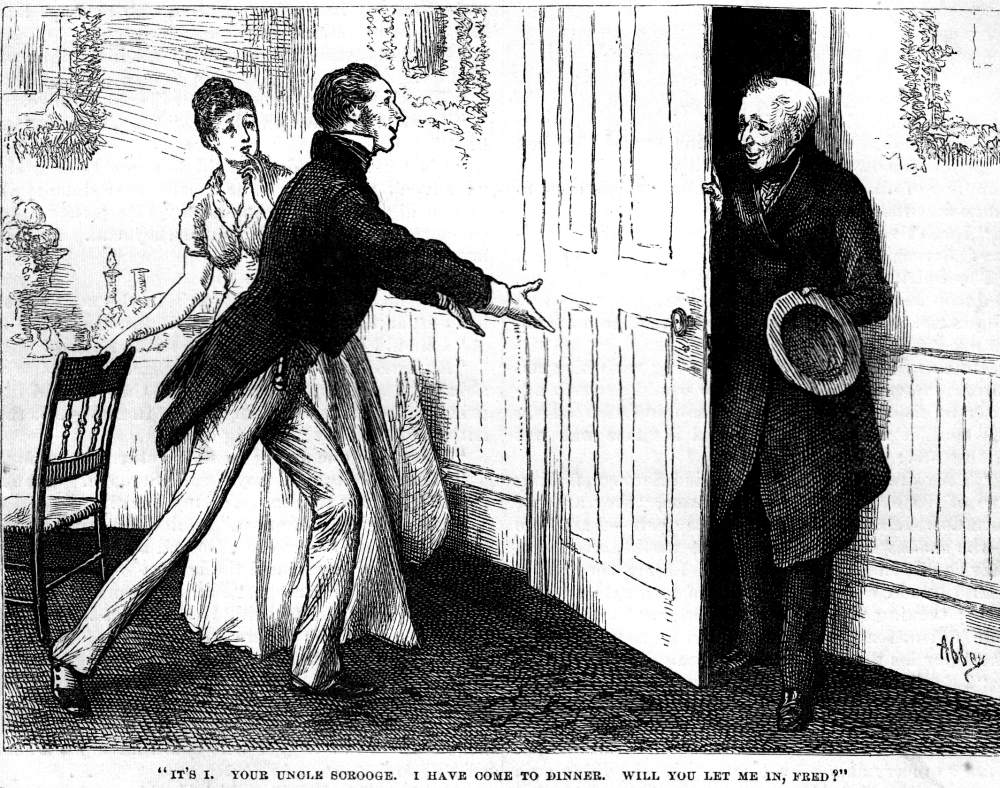
those wrong actions. Every time I'd watch one of the many film adaptations for the novel, I'd enjoy so much the scene where Scrooge wakes up and realizes 
he's alive and it's Christmas morning, and he is brimming with joy, actingcontrarily to his previous behavior! I loved how the joy of that scene was so  palpable, the joy of having been given the chance to set things right, to surprise others with gifts, to help the poor and suffering, to say jokes and cause others 
to laugh and feel merry. Hands down, A Christmas Carol is the most potent 
Christmas story. Charles Dickens: RESPECT!


Lastly, I wanted to mention that my favorite Rankin Bass ABC 25 Days of Christmas special is JACK FROST. It has such a sweet but sad love story!!! A girl 
loves Jack Frost, though she can't see or hear him, and Jack Frost in turn falls in 
love with her, so he decides to become human! BUT as a human he can't tell her that he's Jack Frost! In the end, she gets married to a knight in shining armor 
(literally!!!). When Jack goes to propose to he, he opens the door to see her in 
her bridal gown, arm in arm with her knight. Jack says aside to her father: "I 
thought she loved me!", as he looks down in disappointment. "What?", says her dad, "she told me she loved Jack Frost, but she never told me she loved you." 
This part KILLS ME. I always feel a terrible pang of pity in my heart for poor Jack Frost!! 

Later on, as the newly wed couple steps out of the church, Jack, who returned to his invisible form, lets a snowflake fall on the bride's nose (even though it 
was spring). 
"What was that?", asks the knight.
" An old friend kissed the bride", says the girl as a tear rolls down her cheek. Feels, man.
"You are, Kupla!"