Monday, April 11, 2016

Film review: Summer Wars


Recently, I’ve re-watched Summer Wars, and my reaction was: director Mamoru Hosoda really knows how to make it BIG. It’s action-packed, it has explosive visuals, and a really modern story (at least for the moment it was released— in the year 2008). It explores what would happen if Japan depended on a single social network for EVERYTHING—from shopping and telephone calls to business and government. This social network is Oz, where everyone interacts through personalized avatars. In this setting, Kenji, a high school student who’s a mathematical whiz but a social klutz, is invited by Natsuki, a popular girl in his school, to spend a week with her extended family to celebrate her grandmother’s 90th birthday. During his stay, he accidentally lets loose an unknown entity into the Oz world that hacks the network and halts not only all virtual but also external activity, as the entire nation depends on Oz in order to run. As the world falls into disorder, Kenji joins forces with Natsuki’s family to put an end to the hacker’s chaotic endeavors.

This is the best Summer Wars trailer out there, neither the official Japanese nor English trailers do it any justice:

 What really surprises me about this movie is that it’s the kind that I dislike the most: the blockbuster, guided by action, the kind that is made to entertain the masses, that is really commercial—here and there you see famous brands like Adidas, Apple, and Dell—and mainstream, in this case by Japanese standards (regarding the super anime styles found in the virtual world). However, strangely enough, this time I actually love all of its fast-pacedness. And why would that be? It’s because it’s done with CLASS. It all feels just right. Part of the things that makes up this CLASS is the story telling and the mastery of cinematic techniques. Sure, the film’s fast-paced on the whole, but it knows when to pause or slow down in certain moments, whether it’s to introduce you to the virtual world and the extended Jinouchi family, or to portray the characters’ reactions to bizarre situations. And by slowing down, I don’t necessarily mean only that the action in a scene moves slowly, but also that a scene may be energetic, yet it lasts enough to be believable or to let sink in what’s going on. The use of cinematic techniques—such as camera movement and positions, editing, shot composition and the use of music—play an important role in these aspects. I’ve recently watched a really interesting video on You Tube that deals with Hosoda’s use of camera movement, by the way, and one of the things it mentions is how this technique helps illustrate the characters’ emotions. I really like how in this film, as well as in other Hosoda works, the use of these techniques are at the same level as those in live action films; he treats his animated movies as though they were live action in this sense. 
Another element that makes up the “class” in this movie is its sense of humor. Summer Wars is basically a comedy, there’s no drama about it; its main purpose is fun, the more dramatic elements aren’t principal to the plot and can be taken lightly. Really, when it comes to comedy, you can barely criticize a movie because it’s all just a goof off, there’s nothing to be taken seriously. The humor in Summer Wars is really wacky, and it’s found mainly in the realistic portrayal of a family reunion, which is one of the chief themes of the movie, in all of its informality: the kids running about, the aunts and uncles joking around, 
and Kenji having a headache trying to remember how they’re all related. Much of the humor is also found in the characters’ interactions, faces and movements. One part I really liked was when Kenji learns through television that he has been accused of hacking the Oz network, and he chases some kids in circles trying to take the remote control from them to change the channel, until he finally unplugs the TV. As the kids stand puzzled trying to turn the TV back on, you see behind them Kenji scrambling out of the room on all fours. The composition of that shot is really funny—the kids staring at the “fourth wall”—which would be the TV for them—and a clumsy Kenji in the far back. One other part was when the family finds out that Natsuki had made up a big lie; the camera is placed from Natsuki’s point of view and it pans speedily from one hysterical relative to another, each time getting closer. Again, here we see the clever use of camera movement that I had mentioned earlier. 

Finally, everything's so bold and visually stunning in the scenes inside the virtual world. The virtual avatars are depicted in highly colorful, cartoony anime styles. Here, you can really feel that the filmmakers are having a blast designing these avatars and imagining the internet world—and it’s mostly here is where the film feels BIG. It’s all so technological, so edgy, so avant-garde. Add King Kazma’s theme song, and it bursts with LIFE.


There’s one scene that serves as an example that sums up all of these elements, and it’s the opening credits scene. It shows you snippets of the setting and characters that you will be exploring for the next two hours: the Oz world, how people use it, a few members of Natsuki’s family, some talk about Natsuki’s grandmother in anticipation of her birthday, all the while with a humorous—yet not corny—orchestral track playing in the back. Just like an overture at the beginning of operas and ballets, which tends to be a medley of all of the main themes—well, basically, opening credits scenes are the same concept as an overture. It was at the end of this scene, where the blackened screen finally reads: “Directed by Mamoru Hosoda”, that I found myself saying: now THAT’S how a movie is done!
Two words for Summer Warsfun and slick.
NOTE: This movie can be enjoyed ONLY if you are familiar enough with anime or at least with the Japanese’s tendency for crazy things. If you aren’t, it’s going to be a reeeeeeal pain. Also, it MUST be watched in Japanese with subtitles. It loses all of its charm in the English dubbed version.

2ND NOTE: Another movie that’s also real commercial but worked out well is The Lego Movie, and it’s all for basically the same reasons as in Summer Wars.

Wednesday, March 23, 2016

Friendly Bunnies

                              Last year, my dear grandmother was given two new bunnies for companions. I love bunnies, since I used to own a couple long ago, and they were a big part of my childhood. That’s why I got excited over my Grandma’s new pets. They were a male and a female; we called the male Poi and the female Pia. Poi was really calm and tame, he’d let you carry him without a fuss, but Pia was a nervous wreck! She was too fearful. However, I liked that challenge and wanted to befriend her, try and show her that there was nothing to fear. So each time I picked her up, I wouldn’t pet her, let her roam on my lap. When I let her out, I wouldn’t follow her, except when I had to put her back on the cage. But what really allowed me to gain some of her confidence was the key to any animal’s: FOOD. These two bunnies were some real fatsos. So one time while they were running about, I crouched a little far from Pia and stretched out my arm towards her with a piece of lettuce, which she really liked. She approached and happily munched on it from my hand without fear. Next I held out pieces of the typical food bunnies are always given, and again she ate from my hand without a problem. It was a very nice moment. I really do enjoy friendly encounters with these kinds of harmless animals. 

Tuesday, February 23, 2016

Tren Urbano

                      
J’aime prendre le train à l’université. Des personnes m’ont dit qu’ils n’en trouvent pas rien d’amusant quand on le prend quotidiennement pour quatre ans pour aller à l’université, mais même a ma 5e année de baccalauréat, je le prends avec la même illusion de la première fois. Je le vois avec des yeux d’artiste et de réalisatrice. J’aime l’atmosphère urbaine qu’il transmet. Je trouve fascinant ses mécanismes et son mouvement. J’aime le jeu d’illusion quand on observe le passage rapide du train de l’autre rail à la fois que le train où on se trouve marche ; quand on arrive à une station à la fois que l’autre train sortit ; ou quand on observe dès la fenêtre les personnes qui restent dans la station pendant que le train la quitte. Puis, le trajet lui-même est un peu comme un tour de montagnes russes. J’aime quand on entre le tunnel, et les fenêtres deviennent obscures. J’aime comment, dès l’intérieur, on peut s’imaginer que les portes peuvent être des portales magiques vers différents destins, donc la voiture ne marche pas ; ce qui marche est l’extérieur. Ce que j’aime le plus sont les vues dès la fenêtre. Une opportunité de voir où se déroule ma vie dès haut. Tous les toits des maisons, des urbanisations, les postes d’électricité, les roues, les bâtiments, l’embouteillage a l’autoroute. Voir comme chaque arrête est diffèrent. Le train offre tous sortes des jeux pour l’imagination, et je les prends avec le soin de ne pas manquer un seul, de les apprécier bien. Pour quoi ? Pour deux raisons principales. La première, parce qu’ils font la vie un peu plus interessante, si on le permet. La deuxième, parce qu'ils servent de source d’inspiration pour l’art, pour l’écriture ; il faut les explorer pour voir tout ce qu’ils peuvent offrir pour une bonne création. Je pense que c’est important aussi de capturer ces choses pour faire les personnes conscientes d’eux. Enfin, je veux partager avec les autres comment le train peut être une thérapie pour l’âme, pour réfléchir sur la vie et savourer sa beauté.


Wednesday, February 17, 2016

VILLAINS

When it comes to creating villains, I’m out of my comfort zone. It’s probably because of my extra positive personality. It’s not my thing to deal with negative stuff. I don’t like hard feelings, I don’t like bad, mean people, don’t know too much about them, either; I don’t get their psychology so much. It’s like, it’s hard for me to understand why people can be that way. Well, I actually do understand overall, life is not beautiful for everyone, depending on their circumstances. The problem is that getting in their shoes, empathizing with them, going into a deeper level—THAT is harder for me. That’s why, if I create a villain, it would feel forced. They tend to stress me out, in general, when I’m watching or reading them, especially when it comes to super hero villains. I find tiresome how writers have to be always coming up with how their villain will outwit the hero, and how the hero will overcome him anyways, but keeping it believable at the same time. I also find annoying and pretty childish how these super villains tend to have a motif which influences how they do their bad stuff.

However, there are villains who, even though they might stress me because of their evil, I respect and sometimes even enjoy. For example, Amon from The Legend of Korra. He really did spark fear in me, but I liked how he also inspired awe, there was some majesty to him. Even though he did not—apparently—have the power of bending (the power to control the elements, really useful in battle), he had remarkable skill in the martial arts that matched any bender, PLUS he had the power to actually remove that power. This made him feel truly unstoppable, and even more of a threat as a leader of an equality campaign against benders. The creators did a really good job with this villain, not to mention that his character design was really cool.


Now, there is one type of villain that I like best and with which I’m more comfortable as a writer, and it’s the kind that has a hard past, the kind that used to be good but changed due to a tragic or hard event. These tend to be more real, more believable, and more interesting as it’s more psychological. It’s the idea of a villain who’s got some good mixed within him. There are very popular examples, one being Snape from Harry Potter. The main reason why I like them is their passion and drama, which make them more romantic and thus entertaining. However, I don’t think that a villain should be given much merit because of how entertaining their story is. I think that the complexity of their psychology gives more weight, because that way it is more realistic, more solid, as human beings ourselves are very complex. Recently, I read about a villain who shares both of those qualities: it’s Shadar, from the video game Ni No Kuni. This character was once a wizard who served a powerful kingdom. One day, he was ordered to destroy an entire village, but he decided to rescue a child as he was horrified by the act. As a punishment for disobeying orders, his home village was burned in turn, not sparing anyone. This led Shadar to believe there was no good in the world, and thus become eee-vulll. HOWEVER, one interesting fact is that the purpose behind all of his dark acts afterwards was to end war—a noble goal, but through bad deeds. He became a fanatic. I was impressed by the powerful emotions and drama of this backstory as well as the complexity of the motivation behind this character.


Finally, there’s one other kind of villain which I find interesting, and it’s when you can’t tell on which side he’s on, or when he’s actually on no one’s side, OR when he switches from one side to another. I’m guessing that most people reading this would think of Deadpool as he’s extremely popular right now, but I’m not familiar enough with his character to talk about him. The only villain so far who—at the beginning—has left me very puzzled, was Axel from the video game series Kingdom Hearts. The main antagonists of the series is a group of entities, called Organization XIII. In one part of the story, Sora, the protagonist, has to go through a small group of members of this organization, Axel being one of them. However, he helps Sora eliminate them, but you learn later that they were actually a group of traitors who wanted to take control of their organization, and that Axel sought to eliminate them on the orders of the organization’s boss. So in the end of that chapter, Axel was really helpful, but was still on working on the bad guys’ side…or was he? Even though he gradually fell onto the good guys’ side, his actions and motivations weren’t very predictable, and I enjoyed the confusion he caused as an interesting hook onto the story.

Sunday, October 25, 2015

Groovy

I belong to the seventies.

It's my kind of vintage. There are two things that I like most about it: music and fashion. I love the style of all of the music genres of that decade. There's something about the characteristic flourish of violins in the background of disco songs that always electrifies me; I think it must be the drama. And the congos going mad, giving good flavor. This brings to mind the role African-American culture played in the development of seventies music, its soulful spirit, and this is actually the key aspect that makes me like it so much. Motown! That old sound and groove, it always gets me going! After that there's Bee Gees and ABBA...one last thing that I love is the little twinkle sound effect that was really common back then. Sparkle, sparkle!


I listen to seventies music, and I think of Old Navy (actually, music usually makes me think of clothes or brands). I don't remember if Old Navy was founded in the era, but at least I've often heard seventies-style music on the speakers at the store. Anyways, despite that fashion at the time was a little crazy--combinations of prints and textures that were maybe distasteful--there are many looks and pieces that I really like. I like the combination of orange with blue jeans, the big round sunglasses, the long necklaces. Right now, I can't remember much what else I liked...if I find photos, I'll add them here.


*Another example of the feel that I like about 70s music, but from a really weird movie that I don't recommend if you don't want to go on a spooky acid trip.


Sunday, October 11, 2015

Princess of the Nebula


In a distant hazy nebula, many light years away, lies a kingdom. It was prosperous but now and then there would be a disturbance in certain planets, attacks from outsiders or monsters or conflicts among citizens. In the center of the nebula was a wise star who provided protection to the entire kingdom. To her the kings would speak face to face for advice in very rare, grave situations. In some extremely rare cases, she would rise to fight large enemies or dangerous phenomena.

In this kingdom lived the Princess Andromeda. She had a very unique quality: she could speak with the stars. This was a great advantage for the kingdom, for the stars were the wisest beings in the universe, holding deep secrets, and they could acquire knowledge from any of them any time they wanted. However, the kingdom's star herself asked for the princess to be brought to her, so that she could give her special training and in certain mysterious arts as well as to foment good judgement in the use of her knowledge. 

Andromeda would come for her sessions in the round crystal capsule she used for traveling. Besides this, she enjoyed wandering through the kingdom, visiting planets and encountering her subjects. One time she flew too far away from the nebula, and encountered a black hole, which deeply appalled her, this colossal monster that swallowed all, but what frightened her most was that it swallowed light as well. Not even the power of light could withstand this terrible monster?

There came a point in her life in which she overcame a powerful, metaphysical obstacle, one that gave her maturity. The battle was so intense and profound that she acquired a new special ability: to fly about space without capsule nor suit. She used this power to further serve and preserve her kingdom.

Saturday, June 13, 2015

I'm so cool I can define hipsters


Hipster is all about CULTURE.

It likes to be stylish, by vintage standards. Looking like anything iconic from the past: 50s, 60s retro, up to the 90s. It cares most about the looks.

Its activities are all related to culture: the arts, photography (don't forget, it's gotta look vintage), writing, books, and anything that goes well with those, like coffee, for example.

Which brings us to food. It loves foods that look cool, like macaroons, frappes, soft-colored cupcakes or ice cream.

The last important thing is the entertainment part. It loves old, unpopular OR iconic movies, books, music, videogames, etc, (that sooner or later become popular cause now half the world is hipster). 

Sometimes, when people found someone into fandoms such as LOTR, Harry Potter, Supernatural, Doctor Who, Star Wars, even Legend of Zelda , or say, authors like Jane Austen, Lewis Caroll,etc.(note: here Geek comes in and intertwines with Hipster), they would answer "wow, that person's pretty hip!" as in saying "he's fun/cool!" And from that evolved the word.

One last thing! Internet. Lots and lots and lots of blogging and commenting on the internet.

Now the Hipster world has become pretty mainstream. It's hard to keep up, because that means getting into all those fandoms or cult followings.

On the whole, its attitude is cold and snobbish, even if the people who follow it don't intend it. 

The important thing is not to focus on this lifestyle so much. Life is not just about culture, though it is really important. Look at the people around you. Make sure they're happy. Now that's what life's about.


Monday, May 11, 2015

In Their Place/A Nightmare


A nightmare.

Everything's distorted, the faces, the body parts. Lines, shapes; creatures, people, objects strewn without order about the space. Shafts of light showing glimpses of chaos, while other sights lurk in the shadows.
Screaming, pain.
Mouths gaping wide, gestures of despair. Dead bodies lying about, knives as well.
It's a window to disaster.

It's Nepal.

A great damage has been done as you hid from the danger.
You come out, you see the result.

Chaos, pain, despair. None of this is happening. Not to you. Why is it? Why??
Everything is destroyed. Your home, your family, your friends. Gone. GONE.

This can't be real.
It's a nightmare.

Know Right Now Video: Nepal Devastated by Earthquake (Time)

Thursday, January 1, 2015

Christmas Stories

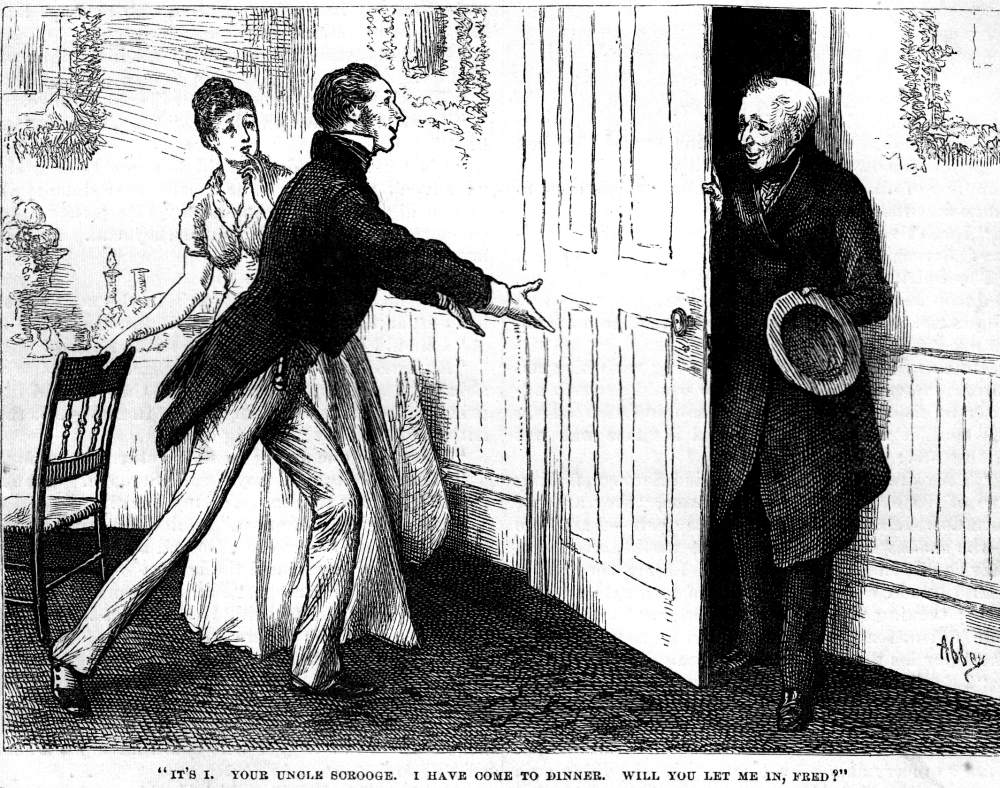
My favorite Christmas story is the Nutcracker and after that, A Christmas Carol. Among the things I love about The Nutcracker is Tchaikosky's ballet score: it is so enchanting and delightfull, with wonderful, unforgetable melodies and orchestrations that capture the mysterious atmosphere of the story, showing how, for children, Christmas is a time where magic can happen. Besides Tchaikovsky's music, I love the story's setting in Germany around the Romantic era, I think. It must have been so wonderful to celebrate Christmas in a setting like that: a lovely European town arrayed with evergreen garlands, old carols and cheer, filled with elegantly dressed people preparing family feasts, decorating their Tannembaums with candles and ribbons in their warm homes, their children playing with their toys and their friends and relatives arriving in fancy dresses and having cordial conversations. 

One thing I've always thought as curious was the figure of Godfather Drosselmier, the old gentleman wearing an eyepatch who gave the Nutcracker to Marie. I've never understood exactly why does he appear on top of the 
Grandfather Clock when it strikes twelve and the magic spell begins. Was that 

an illusion or was he really there? Did he plan all the events so that Marie could break Nutcracker's spell? That, as well as the backstory about how Nutcraker was actually Drosselmier's nephew, and how he got the curse and earned the hatred of the Mouse King, has always haunted me as something mysterious and 
interesting.


As for Christmas Carol, one of the reasons why I like it is similar to the one I 
had mentioned for the Nutcracker: Christmas in an old European setting, this 
time in England. The other reason is the idea of feeling regret for all the bad 
deeds that one has committed and an honest desire to change, to make up for 
those wrong actions. Every time I'd watch one of the many film adaptations for the novel, I'd enjoy so much the scene where Scrooge wakes up and realizes 
he's alive and it's Christmas morning, and he is brimming with joy, actingcontrarily to his previous behavior! I loved how the joy of that scene was so  palpable, the joy of having been given the chance to set things right, to surprise others with gifts, to help the poor and suffering, to say jokes and cause others 
to laugh and feel merry. Hands down, A Christmas Carol is the most potent 
Christmas story. Charles Dickens: RESPECT!


Lastly, I wanted to mention that my favorite Rankin Bass ABC 25 Days of Christmas special is JACK FROST. It has such a sweet but sad love story!!! A girl 
loves Jack Frost, though she can't see or hear him, and Jack Frost in turn falls in 
love with her, so he decides to become human! BUT as a human he can't tell her that he's Jack Frost! In the end, she gets married to a knight in shining armor 
(literally!!!). When Jack goes to propose to he, he opens the door to see her in 
her bridal gown, arm in arm with her knight. Jack says aside to her father: "I 
thought she loved me!", as he looks down in disappointment. "What?", says her dad, "she told me she loved Jack Frost, but she never told me she loved you." 
This part KILLS ME. I always feel a terrible pang of pity in my heart for poor Jack Frost!! 

Later on, as the newly wed couple steps out of the church, Jack, who returned to his invisible form, lets a snowflake fall on the bride's nose (even though it 
was spring). 
"What was that?", asks the knight.
" An old friend kissed the bride", says the girl as a tear rolls down her cheek. Feels, man.
"You are, Kupla!"

Sunday, September 28, 2014

Nothing but Mist

The mere fact that we're alive is a veil between us and being able to understand our existence...
Everything we know about life, we’ve learned thanks to the collective experience of humanity throughout history, recorded in books, and to the experiences of the people around us. We all know at least the basic things of the deep mysteries of existence: why we were born, what’s the point of life, why do we have to die, how you never know how close death is to you, how people say that we should live as though each day were our last, etc. Concerning death, everyone has different beliefs about what happens beyond and how to deal with it….in my case, I know that if you love God, you will go to heaven after you die, once your soul is purified for it. I know that heaven is paradise, it’s the place of ultimate joy and beauty; so do millions of other people: we are certain about it. But it’s curious how we know….but we’ve NEVER been there. No one has ever come back from the death to tell us what it’s exactly like. And we’ll NEVER know, neither farther on in the future …not until we die. I sometimes think about how the dead see us, the living, from where they are. They have such a larger scope and dimension added to their understanding of existence…and I understand then more clearly how our vision here is so LIMITED. It’s only once we die that we will have a direct connection to what we should know, to what really matters, the sense our life had…it’s absolutely true what they say in The Secret of Kells:
 “Oh, there's nothing in this life but mist”

-Brother Aidan

"There is nothing in this life/world but mist,
And we will only be alive
For a short time.”
--Aisling’s Song

Yo Nezahualcóyotl lo pregunto:
¿Acaso de veras se vive con raíz en la tierra?
Nada es para siempre en la tierra:
Sólo un poco aquí.
Aunque sea de jade se quiebra,
Aunque sea de oro se rompe,
Aunque sea plumaje de quetzal se desgarra.
No para siempre en la tierra:


Sólo un poco aquí.
--Yo lo pregunto
(Nezahualcóyotl)

Friday, September 19, 2014

Selfies? Herm....

OMG selfies! Suddenly, I noticed, especially at the start of this year, that they were the rage! More than anything, the concept in itself of the selfie boomed in all sorts of media: t-shirts showing cute animals taking selfies were everywhere, and even a selfie song came out! The idea existed long ago already, but its start may be marked by two things: smart phones with two sided cameras that allowed you to photograph yourself, and later on the emerging of the word “selfie”, whose existence I became aware of only by the end of last year.
            I believe it makes perfect sense that people take so many selfies (or groupies). Once you start taking a picture of yourself, you can’t stop. You just can’t take one, there has to be more, especially because it’s hard to be satisfied with how your picture turned out. Then you start having ideas of funny faces or cool looks. When you’re with more people, this symptom is multiplied, and you end up with a whole bunch of pictures on your camera storage. Yes, I find it understandable, but personally, I don’t like the idea and try to avoid taking selfies. The thing is, you tend to waste time AND camera space taking all those pictures. I’m okay with just a few selfie “shoots”, that’s it. But, you know, it’s not that I find it repulsive, it’s not that I cringe every time I see people taking them, it’s more like I don’t see much point to it. Now, there’s something else I really don’t like related to selfies, and it’s when people post random selfies on Facebook and add hashtags with very lame words or phrases. Now that’s what I really don’t like: hashtags. But that’s another subject that should be tackled on a separate entry.
            That’s all I have to say about selfies.
Rembrandt-Self Portrait, 1630 Etching

Monday, September 15, 2014

Bible Burns

I’ve recently been thinking that in the Bible there are actually many times where people get burned, figuratively speaking. Many of these occasions involve the Jewish people—those who’re angry at Jesus--confronting him but ending up with Jesus shutting their mouths with some answer.  I think it’s all pretty interesting because you get to see God’s knowledge and wisdom in action, resulting in adequate ‘burns’ for each particular occasion. Here are some examples:
                        There’s this moment when the Jewish authorities, who don’t want to believe in Jesus, ask him from whom did he get authority for his actions, and Jesus proposes them something (Mt 21, 23-27):
                        *Note: God had sent John the Baptist to “prepare the path of Christ” in advance, but not everyone believed in him.


                        In another example, Jesus tells an allegory that clearly referred to how the Jewish authorities were corrupt and refused to recognize the Son of God (Mt 21, 33-41). The message was so plain they realized who he was talking about. To top it off, Jesus mentions a foretelling passage from the Scriptures that directly refers to these guys’ conduct, one that they themselves knew well and couldn’t deny its meaning. That was a pretty big burn (Mt 21, 42-43).
                        Now for me, this example is the most epic, though it doesn’t involve a direct conversation with Jesus. He cures a blind man who is known to everybody in the place. When the Pharisees heard of it, they once again refused to believe such a miracle and began to inquire the former blind man and everyone around him again and again about the incident (Jn 9, 26-33).
                        Despite all of these burns and more, though, the Pharisees kept refusing to accept Jesus. I guess that if there’s anyone who can relate the most to the phrase “haters gonna hate”, it’s God.

Thursday, September 4, 2014

Star Child

                On a quiet night, a baby girl lay on the grass in a forest clearing, under the stars. A woman who was passing by saw her and took the strangeness of it all as a sign that this was a star child. She decided keep and raise her. The girl grew into a special child, almost pale as ivory, her hair silver and her eyes clear grey. She took delight in playing in the forest, especially at night, and sang ancient songs that no one had taught her. She was a friend of nature, and no animal feared her. When she sang, the forest’s aura became more serene and beautiful. 

Whenever she combed her hair, stardust would fall and shimmer about the ground. Out of these fireflies were born, floating quietly among the shadows. As she neared the age of eighteen, she began to feel disquiet and yearning in her heart. When she told her mother of this, the woman finally explained the truth about her birth. During the following days, the girl felt that some answer to her yearning was approaching…Finally, one night she was escorted to the sky. Two glowing white beings descended to her, saying they had come to take her to her true home. When she stepped forward, a light glowed about her and arrayed her into her full glory, and so she followed the two beings until the three became bright white stars burning far up the sky. However, she had loved her forest so much that she decided to visit every summer, and it is said that she can be seen or heard singing among the glades, stardust falling about her.


Friday, August 29, 2014

To live again

                Alex sped down the highway. He had just got out of work and had only 3 hours to get home and finish the paper that was due tonight. Listening to his favorite song as he drove on the way only reminded him how much he could’ve written in advance had he disconnected from Facebook, tumblr and You Tube at midday. But that was part of life. There’ll always be moments when you fall for it and distract yourself too much, delaying responsibilities. Besides, how could he fall behind his favorite pages and not reblog posts on time? A new article interviewing his favorite band had come out today, how could he miss THAT? Anyways, it wasn’t like he was going to do much progress during that break. He randomly remembered his brothers and frowned as he realized he hadn’t called them in a long time, or even thought about them much. Maybe he wasted too much time…especially on himself. His priorities were college and work, he really didn’t worry about much else, and his free time he’d spend distracting himself with his interests. He had to admit that he was pretty selfish overall, and that maybe he sucked as a sibling or friend.
            His mind away, he changed lanes abruptly. Next thing his car screeched off the road and ended up with its front half dangerously hanging down the steep, rocky slope that was beside the highway. Alex was so shocked and terrified. In seconds, his life had suddenly plunged into grave danger. He didn’t know what to think, sitting motionless with his seatbelt on, panting fearfully: the wrong moves might cause the car to budge free from its place and plummet to the bottom. That was when he heard someone calling out. He turned around carefully to see two men who had pulled up nearby and where telling him to hang on. He didn’t know if he could believe in those words, as death was clearly a small step away. He found himself thinking that he’d give anything at the moment for being with his brothers or his friends, enjoying a nice beer and a warm conversation.
*                       *                       *
It was a miracle. He couldn’t believe he’d made it, standing on the road surrounded by local policemen, the guys who’d helped him, his best friend and seeing the faces of his brothers and parents in front of him as a tow truck pulled his car back from the brink. “We were so worried…” hugs and honest words. Brimming with palpable attention and care. As arrangements were made to patch up the situation, his brothers talked about different plans to cheer him up. “It’s been a long time since we don’t exchange CDs and stuff, I miss doing that”, “let’s hang around more”, “we should go to the beach”, “why don’t we spend a day biking together and later eat ice cream and goof around?” He slowly felt that the days before him seemed fresh and bright. He wasn’t conscious that in the past hour he hadn’t thought even once about his usual preoccupations or interests. He was so focused on the moment, on this good taste of what life really is like.

Times Like These - Foo Fighters

Monday, July 14, 2014

Scandinavian: The Splinter

Long ago, there was a young man who saw strange things through one eye. He couldn’t be sure whether they were real or not. Among his visions was that of a maiden pleading for help in a dark cave, and it always troubled him. He finally came upon a wise old man and asked if he could explain anything; the old man told him that he had a troll splinter in his eye. In the days of old, trolls roamed the lands during nighttime, and they all had splinters in their eyes that caused them to see everything in a distortional manner, confusing what was foul for fair things. When the legendary day came in which numerous trolls turned to stone after a brave lad tricked them into seeing the sunlight, the splinters were scattered far and wide, and some settled into people’s own eyes. Our hero was now confused, for though now he understood things better, still he was troubled about the vision of the maiden.

            One day a wandering boy arrived to the village, claiming he was searching for his twin sister, who had been captured by a troll. When the young man saw him, he realized that the girl in his visions was this boy’s sister, due to the striking resemblance.  He offered the boy his help, revealing why. They set off together to the mountains, using the splinter visions for clues, until they reached the troll cave and managed to get inside through cracks in the stone. After much cautious searching, trying to venture unseen, they found the boy’s sister. However, the troll had scented them and began to track them down. Our hero used his wit to lure the troll outside, taking advantage of this for the three of them to escape, and the troll immediately burst into stone. The trio celebrated, and got in the cave to take with them some of the treasures. They returned to the village with the good news and encouraged the people to take the remaining riches in the empty cave. Soon after the twins returned home, and their family rejoiced and set up a celebration. But as the night lights shone upon the swirling colors of the party dresses, the two brothers were puzzled to see now and then that there were ugly, tasteless decorations put up.

Saturday, July 12, 2014

Russian Folklore: KALABOK

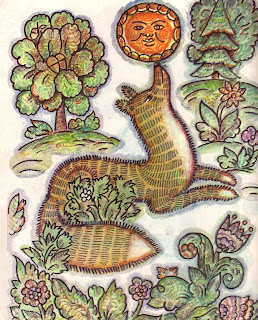
There was once a witch who could do all sorts of things. One day she unknowingly gave life to a pancake she was making, and it rolled away. However, it was wintertime, so it nearly froze to death in the wild until a little girl found him. Since she saw he could talk, she thought he was special and rescued him, taking him home and naming him Kalabok. He was so grateful and touched by the girl’s kindness that he vowed to protect her and her family, which was poor and victim of all sorts of evil sprites. But what could a pancake do except roll around? He decided to go ask the witch, his creator, to give him powers that would make him useful (in the spring time). The witch was surprised, but she was good-hearted so she granted his wish, and Kalabok became a small sprite himself, light and elvish-like. His cleverness allowed him to make the most of his simple powers, and he became the guardian spirit of the house, warding off bad deeds, making little miracles for situations like when bread ran out. All he needed to keep up his energy was a bag of flour now and then. Kalabok protected the family for generations to come, and kindness was seen as an important family value, as it had earned them their faithful little sprite. The day came, however, in which the house was left deserted as the great great great grandchildren had gradually settled down elsewhere, and no one would buy it since it was so old. Poor Kalabok! He still lingers there, hoping his scattered family would return someday.

Wednesday, June 18, 2014

Review: The Wind Rises

"All I wanted was to make something beautiful."

I LOVED THIS FILM . Some time had to pass before I could gather my thoughts on it and write down my reaction, for first I had to let the beauty sink in, it had left me dazed. Finally, the time has come to WRITE MY REVIEW!
I first want to talk about how some of the typical elements that are “trademarks” of Miyazaki’s style are present:
It’s ENGAGING: Like all of his other movies (I especially noticed it in his most recent films), The Wind Rises has a great atmosphere/mood/ “ambientación”  that pulls you into the world and story…you actually want to understand what’s going on, almost like if there were a dialogue between the screen and the spectator. A factor that greatly contributes to this is the pacing of events…gives kind of a convincing, realistic feel to the storytelling (of which Miyazaki-san is a great master). These aspects also cause you to have a GREAT time with friends and family while watching, since there’s space for commenting on what’s going on without getting lost or ruining the mood of the film. One particular example of this in The Wind Rises is how the extras tend to be very peculiar in character design, like, some are fat, others have teeth sticking out from their mouths, etc. and I was all, “omg, what’s with the people in the background?” Finally, Miyazaki’s humor, a quiet and human one, quite heartwarming, gives a final contribution to the “aura” of the movie: this can be found in characters, especially in those of frank and sarcastic Honjo, bossy and energetic Mr. Kurokawa, and Jiro’s responsible, scolding, down-to-Earth younger sister, Kayo. The humor also lies in unexpected funny sequences or events that lighten the somberness of the movie.
            BEAUTIFUL ANIMATION: Miya-san’s characters tend to have very human-like movements, like, they interact with their surroundings just like one would in real life. A famous example for this is when Chihiro puts on her shoes in Spirited AwayInstead of just animating her feet getting on the sneakers and walking off, he recreates how a real child might do it: wiggling his feet and tapping them to make sure they are snug inside.  In The Wind Rises, there was this one sequence where Jiro was at his desk, I think he was straightening the paper he was working on and then rummaging around his stuff looking for a ruler or something. 
 
I found it so smooth and delightful to watch….it’s interesting how such a small ordinary sequence could make any impact.  However, I found some scenes kind of lacking, sometimes the characters looked a little awkward and there wasn’t as much visual richness as  in The Secret World of Arrietty and From Up On Poppy Hill, its predecessors. But I really didn’t mind this, having read that the director had been too exhausted to make sure all of the scenes were turning out exactly as he wanted, which is one of the reasons why he had decided this would be his last film. Anyway, I think anything lacking in image was perfectly balanced with the heart and powerful content of the movie.

The guys at Studio Ghibli are also great magicians with their breathtaking backgrounds. They’ve only improved more and more in visual quality, surely thanks to technical advances. One detail that I found very impressive was a close up on a small cascade of water…this is 2D animation, guys, and yet you can almost feel the texture of the water (of course, they’ve integrated CG effects for that, but it still awed me).
FEMINISM: I find funny how Miyazaki managed to squeeze in his feminist ideals even in this movie, whose focus is a guy's pursuit of his professional dreams, set in 1920s Japan, where men dominated in professional fields. He did it mainly in the figure of Kayo Horikoshi, Jiro’s sister: she is very responsible, has great attitude, kinda pesky as she’s always finding something to criticize in her big brother. Her dream is to study medicine, and she voices her frustration that she can’t achieve it as easily as men due to society's standards for women.
FLIGHT: Miyazaki’s obsessed with aircraft, and thus anything else that has to do with flight. Just like feminism, this theme can never be left out of his creations. It’s pretty moving that he chose to focus on it in his last film: he wants to talk about what he loves most. He wants to share with the world why he believes planes are so beautiful. He had already dedicated his film Porco Rosso directly to this concept, but in this one, it is almost the protagonist. I found this interesting in which instead of developing a concept that would be more convenient economically, he decides to focus on what he’s always wanted to talk about, what he loves most…he created something more personal. It’s kinda similar to the figure of Beethoven, in which his greatness lay on how powerfully and beautifully he expressed his emotions and views through his works, instead of creating for a specific audience…revolutionary (I know that it’s logic to produce for a majority since it’s what you live on, but I don’t think artists have to enslave themselves to just that method).
SLOW, QUIET MOMENTS: This is the slowest and most quiet of all of Miyazaki’s movies. He tends to insert at least a couple of serene sequences on each one, but The Wind Rises is loaded with them—in fact, the entire film is like a pause in itself.  Makes perfect sense if this is his last film, and this trait makes it perfect farewell work. Miyazaki's acting like a grandpa who has reached the end of the road and he wants to share his experience with his son, grandson, or the world. I felt that Miyazaki was reflecting about life as he did the film, as if he wrote a journal entry or something about the lessons he's learned from life and then turned it into a movie.
GiovanniBattistaCaproniLefteBrother png.jpg                JOE HISAISHI’S BEAUTIFUL MUSIC: You can’t separate Joe Hisaishi’s music from Miyazaki’s films.  This wonderful composer’s works are nostalgic and sweet. Here, the soundtrack sounds European, specifically kinda Italian, I guess because of the World War setting and above all because the film also is a tribute to the great Italian aircraft designer, Giovanni Battista Caproni. I found it so sweet, like an old man remembering the days of his youth, when he met his wife and dreamed of a beautiful future…the good times of his life. 
*Here's the main theme of the film, which you can listen to if you want while reading the rest of the review.
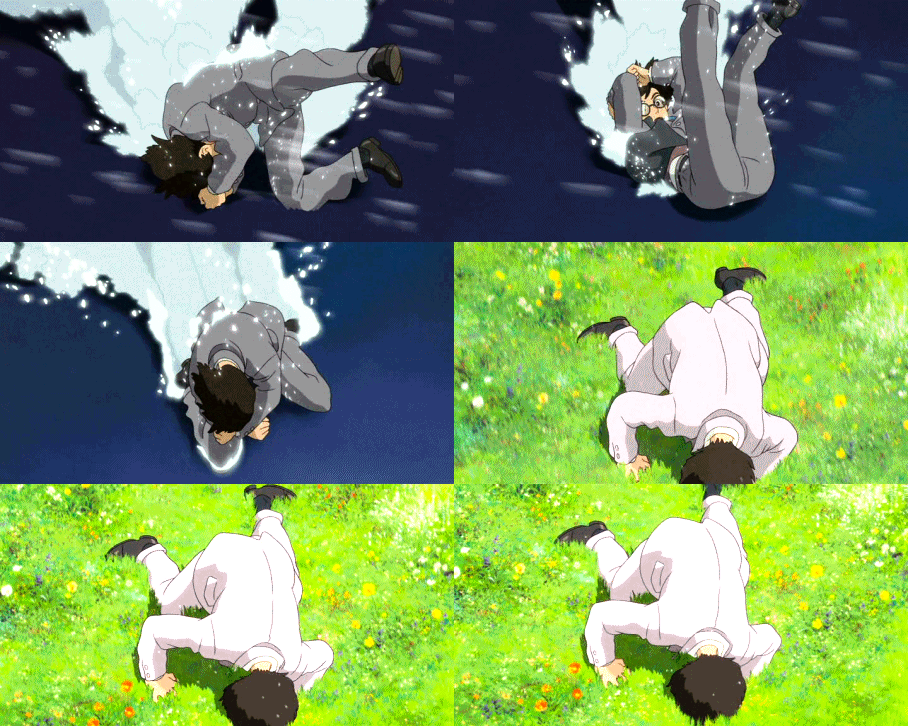
            *I wanted to make a small comment on how it is quite easy to tell that some sound effects were human made because of their peculiarity, and I absolutely loved the result…it gave a more artsy, cool and mysterious feel to its scenes: like the earthquake part and the metaphorical sequences were Jiro and Caproni would meet.

            NOW, what I loved most of the film was its CONTENT, which is what gives weight, delivered through the dialogue and all the artsy, imaginative visual sequences (this last is another of the traits that makes Miyazaki cool, a trademark of his genius). The voice acting thus is important...
VOICE ACTING: I watched the movie in English because it was the only version available at the moment. I’m always told that it’s better to watch films in their original language, but the English dubs for Ghibli films always turn out super great. I REALLY loved the voice acting in this one, I found it super fun, giving much weight to the characters themselves. It IS quite akward overall, since the sound did not match exactly with the mouth movements that are really speaking Japanese, plus I found Joseph Gordon Levitt’s performance as Jiro too sleepy and somber at times, while Nahoko’s was a little too high-pitched for my taste. But I really didn’t mind any of that, I still think it was pretty good and also know that it’s not that easy to make a perfect coordination between foreign mouth movements and translated lines. I especially loved the voice acting for Mr. Kurokawa, Honjo, Kayo, and the “foreign” characters like Caproni and the random German people (I loved how they had accents according to their languages). I got to practice both my German and French listening, since there were no subtitles for those lines, and I REALLY liked that.

            As for the CONTENT in itself, these were the aspects that got to me the most:
            The main theme, embodied in the quote that makes the foundation of the film:
« Le vent se lève! . . . il faut tenter de vivre! » (« The wind is rising ! …we must try to live ! »)
It speaks about how we must make the most of our present circumstances, be them tough or not. In this film’s case, the characters ‘s circumstances are pretty challenging, and it’s admirable to see them surviving such hard times. It’s exactly what is expressed in The Lord of the Rings, the Fellowship of the Ring, when Gandalf counsels Frodo in the mines of Moria:
Frodo: “I wish the ring had never come to me. I wish none of this had happened.” 
Gandalf: “So do all who live to see such times. But that is not for them to decide. All we have to decide is what to do with the time that is given to us.”

            The film also deals directly with the creative process, exploring and romanticizing how professionals get inspired with an idea and make it come to life, work with a team, exchange ideas to see which decisions are best, fail and learn from their mistakes to start over and over again.
            Despite its focus on creative fields, I love how it is all very relatable in which through narrating the life of an historical celebrity in the world of engineering, the movie reflects on life and dreams…also, how the goal of the movie is not entertainment, but more reflection, the communication of a certain message. Everyone has dreams and struggles to achieve them...when watching the movie, one might ask himself: “what is MY dream?” Or: “who is MY professional hero, role model?” 
The relationship between Caproni and Jiro can be applied to anyone who admires a certain professional. I thought that one can replace Caproni with the historical Jiro Horikoshi, and Jiro with Miyazaki himself, or any other aeronautical engineer freak :P, and so on: to me, Miyazaki is Caproni and I’m Jiro (or any other person who looks up to Miyazaki is Jiro); finally, it can even be perfectly applied to any other aspiring professional who has a role model to look up to. I also felt that Miyazaki was speaking directly through Caproni’s advice, which consisted in general of applying human values to your professional growth in order to really be an authentic professional, and perhaps leave a footprint on other people’s lives, if not on history.

            Caproni has an important line in which he declares that artists have ten years in the sun (referring to glory or good years). THIS IS SO TRUE (and the “ten years” part means a limited amount of time, usually small). I mean, we’re human, we’re not deities, so it’s natural that one would produce one success to another…we won’t have enough constant inspiration for that. And there’ll be a point in which we run out of ideas. Inspiration doesn’t come when we ask it to. Some examples to which this line can be applied are the Beatles, who lasted 10 years together, and Bill Waterson, the genius behind the comic strips Calvin and Hobbes (practically the most glorious of all comics), who also worked for around ten years and disappeared from the public face of the world, stating he’d said everything he had to say. I believe Miyazaki’s own “ten years” lies in the 2000s, between Spirited Away and this final film, in which he achieved more recognition than ever for his work and a boom of fans took place, plus I find his artistic peak in his latest works, but this is just my opinion, it is very debatable.

Thank you for reading my long rant; I've been wanting to write this for a long time :).